Common Challenges in Restaurant Management (and How to Solve Them in 2026)
Restaurant management has always been a balancing act between speed, service, and precision. But in 2026, the pressure is even higher. Customers expect seamless experiences, instant reservations, accurate waiting times, and personalized service while restaurant owners struggle with staffing issues, operational chaos, and rising costs.
Behind every successful restaurant is not just great food, but a well-structured management system. And behind every struggling restaurant is usually the same problem: inefficient operations and lack of control over daily workflows.
This guide breaks down the most common challenges in restaurant management today and provides practical, real-world solutions that help restaurants improve efficiency, customer satisfaction, and profitability.
Why Restaurant Management is More Complex Today
Restaurant operations used to be relatively straightforward. Walk-ins, phone bookings, and manual order tracking were enough. But the landscape has changed dramatically. Today’s restaurant environment includes:
- Online reservations and digital booking platforms
- High customer expectations for speed and personalization
- Staff shortages and unpredictable availability
- Multi-channel ordering systems
- Data-driven competition
This complexity means restaurant managers must now operate like system operators, not just service coordinators. Without the right structure, even well-run restaurants begin to experience inefficiencies.
Challenge 1: Overbooking and Scheduling Conflicts
One of the most frequent issues in restaurant management is overbooking or reservation conflicts. This happens when booking systems are not properly centralized or when manual processes are still being used.
Why this happens:
- Phone-based reservations without real-time updates
- Multiple booking sources not synced
- Staff manually tracking tables
- Lack of visibility into seating capacity
Impact:
- Double bookings and guest dissatisfaction
- Long waiting times despite reservations
- Loss of customer trust
- Negative online reviews
In many cases, restaurants don’t realize how much revenue they lose due to poor reservation coordination.
Solution:
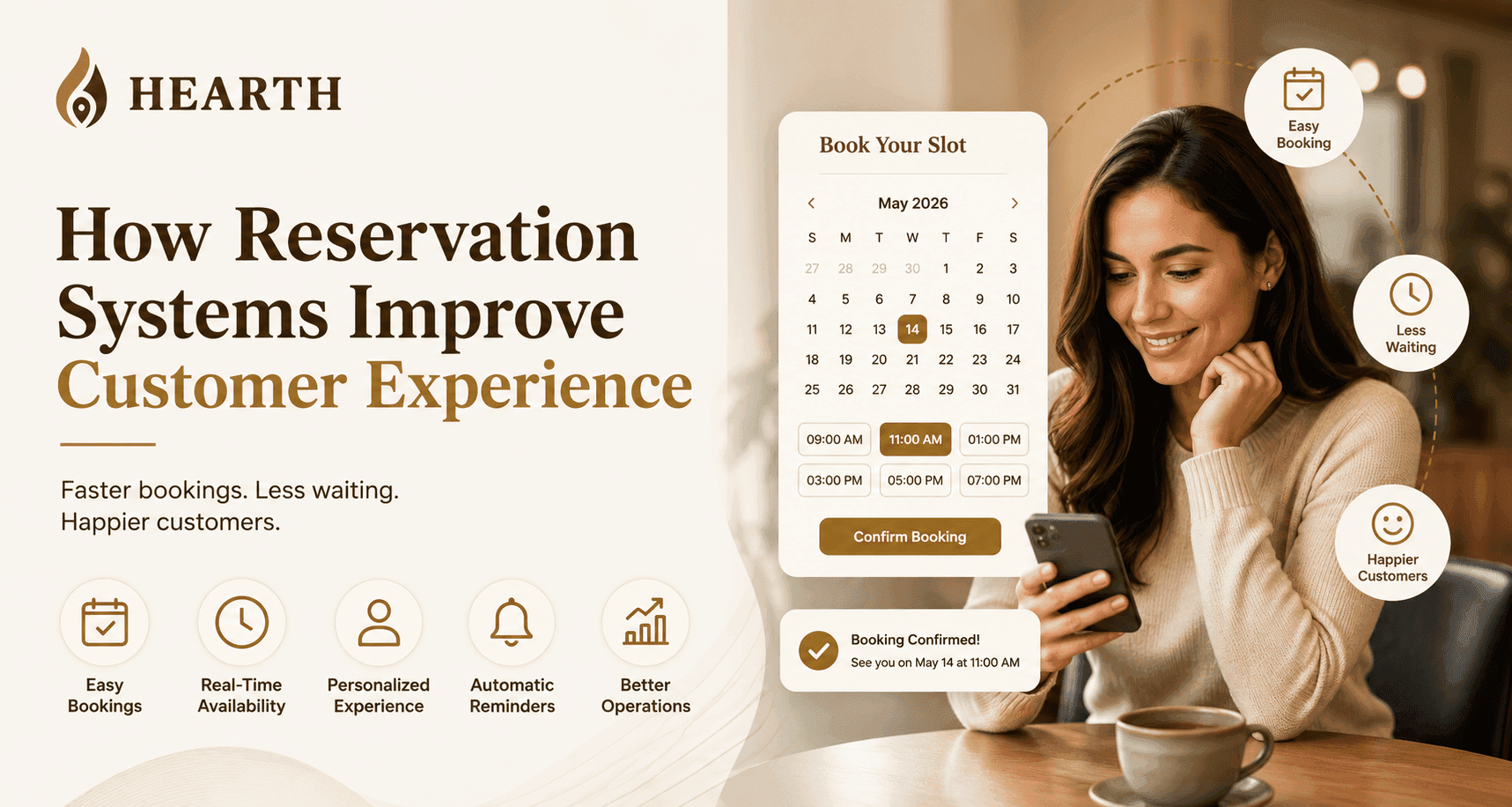
The most effective fix is adopting a real-time reservation management system that centralizes all bookings.
- Modern systems allow restaurants to:
- Track reservations instantly across all channels
- View table availability in real time
- Automatically prevent double bookings
- Manage waitlists efficiently
Some advanced systems, like integrated reservation platforms used in modern restaurants, also allow booking flows directly through the restaurant’s own website, reducing dependency on third-party tools.
👉 The result is simple: fewer errors, smoother service, and happier guests.
Challenge 2: Staff Shortages During Peak Hours
Staffing remains one of the biggest operational challenges in the restaurant industry. Even well-planned teams struggle during unexpected rush hours or last-minute absences.
Why this happens:
- High employee turnover
- Poor shift planning
- Lack of demand forecasting
- Seasonal fluctuations in customer flow
Impact:
- Slower service during peak times
- Overworked employees
- Lower service quality
- Increased customer wait times Staffing issues don’t just affect operations—they directly affect customer experience.
Solution:
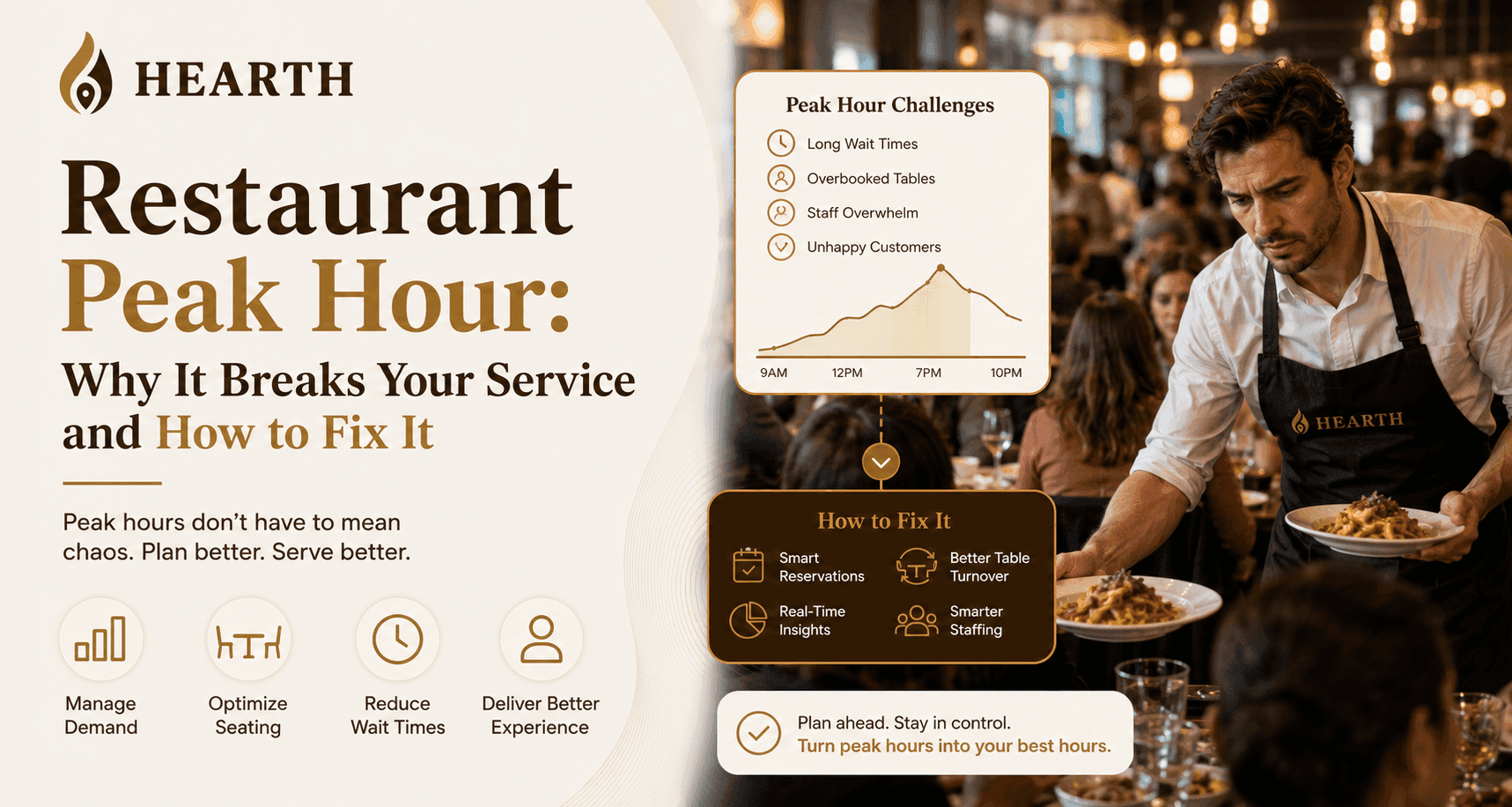
The key is predictive staffing based on data, not guesswork. By analyzing reservation patterns and historical data, restaurants can better prepare for busy periods. Modern management systems help by:
- Predicting peak hours based on booking trends
- Helping managers schedule staff efficiently
- Reducing overstaffing during slow periods
- Improving coordination between kitchen and service teams
When combined with automation tools, staffing becomes far more predictable and efficient.
Challenge 3: Inefficient Table Management
Even if reservations are well-managed, many restaurants still struggle with poor table utilization.
Why this happens:
- No real-time floor visibility
- Manual seating decisions
- Lack of optimization tools
- Poor communication between hosts and servers
Impact:
- Empty tables during peak hours
- Longer waiting lines
- Reduced revenue per service
- Inefficient guest flow
Table management is one of the most overlooked areas of restaurant operations, yet it has a direct impact on profitability.
Solution:
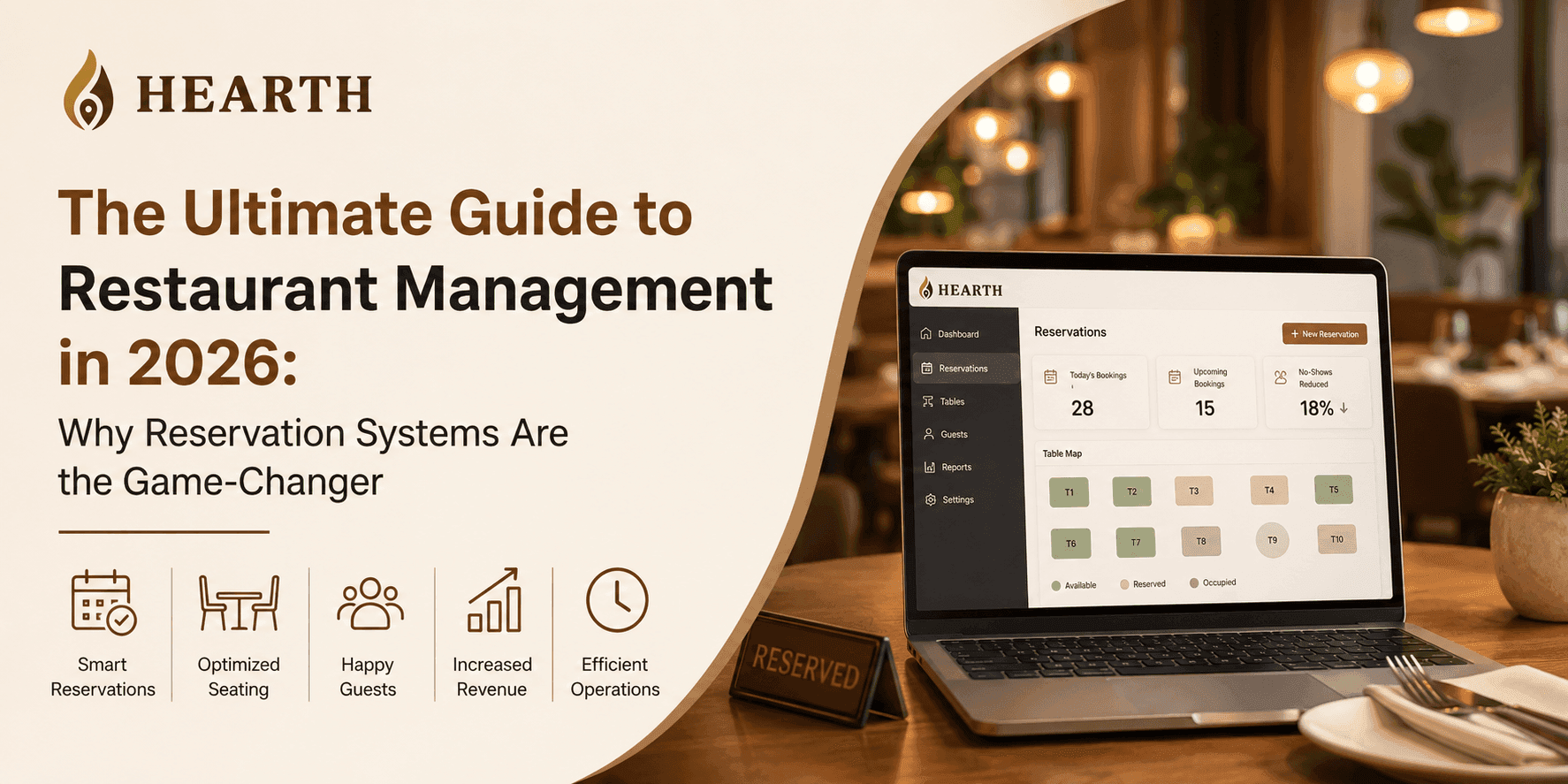
The solution lies in real-time floor planning and dynamic table allocation. With modern systems, restaurants can:
- Visualize seating layouts in real time
- Assign tables dynamically based on availability
- Optimize table turnover without rushing guests
- Balance reservations and walk-ins effectively
Some advanced platforms also integrate floor management with reservations, ensuring that seating decisions are always data-driven rather than manual guesswork.
Challenge 4: Poor Customer Communication
Customer communication is often inconsistent in traditional restaurant setups.
Why this happens:
- Lack of centralized guest data
- No tracking of preferences or history
- Manual communication processes
- No automated updates or reminders
Impact:
- Missed special requests
- Impersonal guest experience
- Lower repeat customer rates
- Weak brand loyalty
In today’s experience-driven dining culture, communication is just as important as food quality.
Solution:
Restaurants need to shift from transactional service to personalized guest engagement. This includes:
- Tracking guest preferences and dining history
- Noting special occasions like birthdays or anniversaries
- Capturing service notes for repeat visits
- Sending automated confirmations and reminders
Some modern systems integrate these features directly into reservation workflows, allowing staff to access guest profiles instantly during service.
👉 This turns a standard dining experience into a personalized one.
Challenge 5: Lack of Operational Visibility
One of the most dangerous issues in restaurant management is not knowing what is happening in real time.
Why this happens:
- Disconnected systems
- Manual reporting delays
- No centralized dashboard
- Limited access to live data
Impact:
- Poor decision-making
- Inefficient resource allocation
- Revenue leakage
- Inability to scale operations
Without visibility, managers are forced to react instead of plan.
Solution:
Restaurants need real-time operational dashboards that show:
- Active reservations and table status
- Staff performance and service flow
- Peak hour analytics
- Guest behavior insights
Some modern restaurant systems combine all of this into a single interface, allowing managers to monitor everything from one place instead of juggling multiple tools.
Challenge 6: Disconnected Booking Channels
Many restaurants receive bookings from multiple sources:
- Website reservations
- Phone calls
- Walk-ins
- Third-party platforms
- Why this is a problem:
- Fragmented data across systems
- Conflicting reservations
- Manual entry errors
- Staff confusion during service
Solution:
A unified booking system solves this by:
- Centralizing all reservations into one dashboard
- Syncing availability in real time
- Eliminating duplicate entries
- Managing all booking flows consistently
When booking systems are integrated into a restaurant’s own website, control increases significantly, and dependency on external platforms decreases.
Challenge 7: Managing Service Timing and Payments
Service timing and billing are often overlooked but crucial aspects of restaurant efficiency.
Why this becomes a problem:
- Delays between ordering and billing
- Lack of coordination between kitchen and floor staff
- Slow table turnover
- Manual payment processing
Impact:
- Reduced table efficiency
- Longer customer wait times
- Lower revenue during peak hours
Solution:
Modern restaurant operations rely on streamlined service workflows, where timing, ordering, and payments are connected. This includes:
- Coordinated service timing across kitchen and floor
- Faster billing processes
- Integrated payment handling
- Better control over table turnover speed
When service timing is aligned with reservation data, restaurants operate much more efficiently.
How Modern Systems Solve Restaurant Management Challenges
When you look at all these challenges together, a clear pattern emerges:
👉 The problem is not effort—it is fragmentation. Modern restaurant management systems solve this by bringing everything into one ecosystem:
- Reservations and waitlists
- Real-time table management
- Guest profiles and preferences
- Booking flow automation
- Service timing coordination
- Operational dashboards
Instead of juggling multiple tools, restaurant managers get one unified view of operations. This is where platforms like modern reservation management systems (such as Hearth-style solutions) naturally fit in—not as a replacement for human service, but as an operational backbone that reduces friction.
Key Benefits of Solving These Challenges
When restaurants address these operational problems effectively, they experience:
- Higher table turnover efficiency
- Better customer satisfaction
- Reduced operational stress
- Increased revenue per service
- Improved staff coordination
- Stronger customer retention
Most importantly, they gain predictability, which is essential for long-term growth.
Final Thoughts
Restaurant management in 2026 is no longer just about managing people—it is about managing systems. The biggest challenges—overbooking, staffing issues, inefficient table usage, poor communication, and lack of visibility—are all solvable with the right combination of process and technology.
Restaurants that continue relying on manual systems will struggle to keep up. Those that embrace structured, data-driven operations will scale faster, operate smoother, and deliver better guest experiences.
The future of restaurant success lies in intelligent, connected, and automated management systems that remove friction from daily operations and allow teams to focus on what truly matters: delivering great dining experiences.
FAQs
What are the most common challenges in restaurant management?
Overbooking, staff shortages, inefficient table management, poor communication, and lack of operational visibility are the most common issues.
How can restaurants solve overbooking problems?
By using a centralized reservation system that provides real-time table availability and prevents double bookings.
Why is staff management difficult in restaurants?
Because of unpredictable demand, high turnover rates, and lack of forecasting tools.
How does technology improve restaurant management?
It automates reservations, improves communication, optimizes seating, and provides real-time insights.
What is the best way to improve restaurant efficiency?
By combining automation, data-driven decisions, and centralized management systems.