Restaurant Peak Hour: Why It Breaks Your Service and How to Fix It
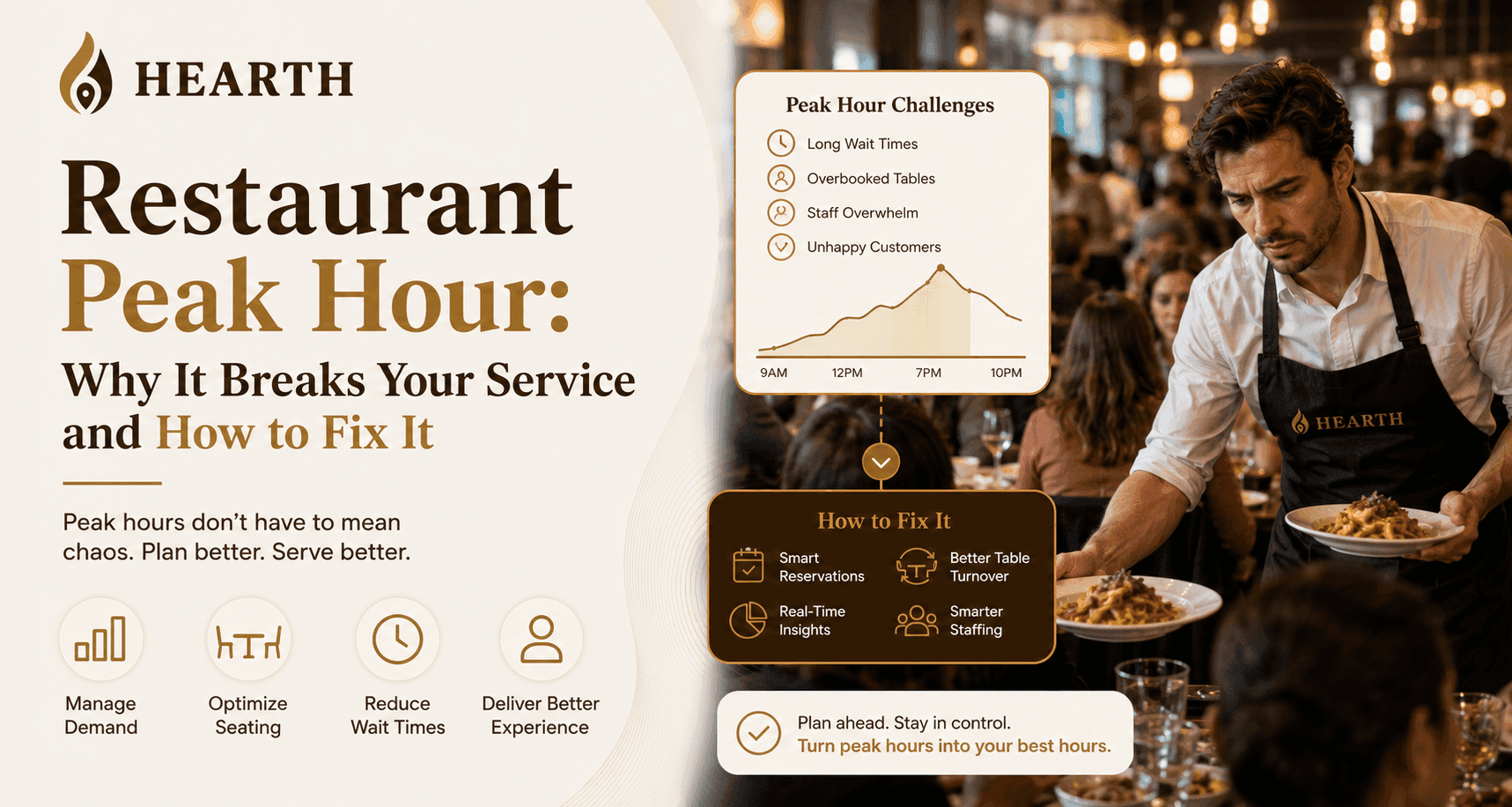
Any restaurant owner can relate to that experience: the restaurant is crowded, the waiters are busy and everything appears to go out of control. This is the truth about restaurant peak hour: a time that may make or break your reputation. Peak hours are an opportunity but also a weakness of operations, staffing, and systems. Even the finest restaurants may have problems with the quality of service without the appropriate preparation.
What Is Restaurant Peak Hour?
Restaurant peak hours are the most active times of the day when the customer demand is the highest. Typically, these include:
- Lunch hours (12 PM – 2 PM)
- Dinner hours (6 PM – 9 PM)
- Weekends and holidays
Restaurants are busy during these times and are usually operating at full capacity. Although this is ideal in terms of revenue, it can easily get out of control unless the systems are in place.
Why Restaurant Peak Hour Breaks Your Service
1. Overcrowding and Long Wait Times
Excessive waiting is one of the most prevalent problems at the peak hour in a restaurant. Lack of a proper restaurant booking system will lead to:
- Overcrowded waiting areas
- Uncertain wait times
- Walk-in chaos
Waiting customers have much less chances to come back, and the chances of dropping negative reviews are higher.
2. Poor Table Management
It is very hard to handle the tables manually in times of busy periods. In the absence of a table reservation system, restaurants usually:
- Miss available tables
- Double-book reservations
- Fail to optimize seating
This will usually result in empty tables being ignored as customers stand waiting or duplicated bookings causing confusion.
3. Staff Overload and Burnout
Your employees are under a lot of pressure during peak time. Servers are multi-tasking and have to deal with several tables at the same time, kitchen staff members are rushing with orders and hosts are having difficulty dealing with the incoming guests. This can result in:
- Waiters with excessive tables.
- Kitchen delays caused by overloading of orders.
- Reduced service quality
Even the most advanced teams may fail when the system is not efficient.
4. Communication Gaps
Without streamlined processes, communication breakdowns are bound to occur during the busy hours. This leads to:
- Front-of-house and kitchen
- Hosts and servers
- Management and staff
The absence of coordination has a direct effect on customer experience.
5. Lack of Reservation Control
Busy restaurants that are dependent on walk-ins or manual reservations tend to lose control in the busiest hours. It is almost impossible to balance the demand without an adequate restaurant booking system. Failure to have a reservation management restaurant solution usually leads to:
- Overbooking
- Missed reservations
- Poor customer flow
The Hidden Cost of Poor Peak Hour Management
The inability to handle peak hours does not only impact a single shift, but also impacts your success in the long run. Here’s how:
- Customer dissatisfaction = less repeat visits.
- Bad online feedbacks = negative image.
- Lost revenue → inefficient table turnover
- Staff burnout → high employee turnover
Your most profitable time should be your peak hours but not necessarily your most stressful ones.
How to Fix Restaurant Peak Hour Problems
The following steps helps you to improve upon your existing restaurant reservation process:
1. Implement a Restaurant Reservation Management System
To manage peak times and chaos at your establishments, you can rely on a restaurant reservation management system. It allows you to:
- Manage real-time bookings
- Avoid overbooked tables
- Optimize table placement
- Track guest flows
With a restaurant management system in place, you won't have to guess about the availability of your dining area but will have complete access to your available dining room.
2. Use Restaurant Reservation Software to Automate
Manually entering and managing reservations is costly and time-consuming. By using restaurant reservation software, you can automate your restaurant's reservation process.
- Online bookings
- Confirmation messages
- Waitlist management
- Table assignments
Automation reduces the potential for human error and frees your staff to spend more time providing great customer service.
3. Optimize Your Table Reservation System
If your table reservation system is set up correctly, it can help you reach a maximum amount of seating efficiency for your guests. Key features that can help to optimize your reservation system are:
- Smart allocation of tables
- Tracking of table turnover rates
- Providing immediate updates regarding table availability to guests
An effective table reservation system ensures that every table in your restaurant is being utilized optimally and results in fewer guests waiting to be seated, thereby increasing the revenue of your restaurant.
4. Improvement to Staff Coordination and Communication
Collaboration between employees is especially important during peak periods. In order to facilitate this, you can do the following:
- Utilize data on peak periods for staffing (e.g., scheduling staffing according to peak periods of activity).
- Cross-train employees to enhance the level of flexibility within your staff.
- Using online ordering and Kitchen Display Systems (KDS).
Create identifiable workflows for each staff member to assist with timeliness, ease of operation and effectiveness.
5. Manage Walk-ins and Use Data Strategically
Balancing walk-ins with reservations is key to maintaining control. You can:
- Use a digital waitlist system
- Provide accurate wait time estimates
- Balance walk-ins with reservations
- Analyze peak times and customer behavior
Using data from your reservation management restaurant system helps you continuously improve performance.
Benefits of Fixing Peak Hour Issues
1. Better Customer Satisfaction
Shorter wait times result in customers spending less time waiting and more time enjoying their meal. Additionally, smooth dining experiences equate to increased satisfaction levels for all of your customers, increasing their likelihood of returning.
2. Increased Revenue
Using efficient systems such as restaurant reservation systems and tables reservation systems allow you to have more guests served during the same period of time. With higher turnover rates per table during peak times, you can also expect to see higher sales during those peak periods.
3. Less Stress for Your Staff
Having your workflows organized and streamlined through the use of restaurant reservation management software allows your staff to manage all of the tasks within their responsibilities much easier. This helps to create less pressure for your staff, improving their morale, and keeping service quality consistent throughout the day.
4. Stronger Brand Reputation
When your customers are happy, they will leave positive reviews and recommend your restaurant to others. By providing your customers with consistently great service during busy times also helps to develop a positive brand image and establish long-term trust with all of your customers.
Final Thoughts
The busiest hours in a restaurant don’t have to be stressful and need to be done correctly. If you have the proper systems; restaurant reservation management system, restaurant reservation software, and restaurant booking system in place, you can convert your busiest periods into your most profitable.
The formula is easy: Plan ahead, automate the processes and keep improving with accurate data.